Workshops
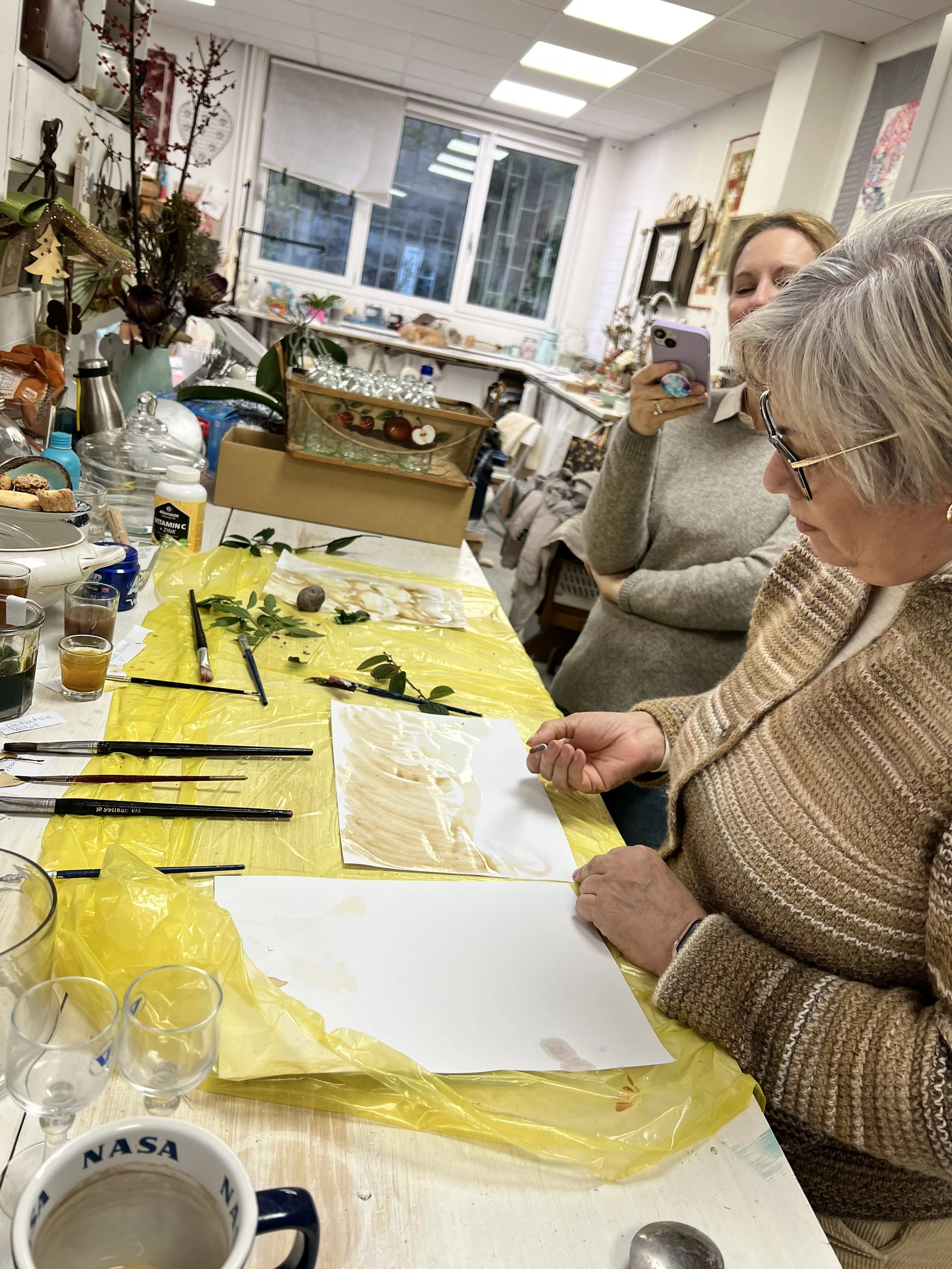
My workshops are less about learning a particular technique and more about creating the conditions for curiosity, observation and experimentation.
Working with natural inks, place and materials gathered with attention, participants are encouraged to notice, question, experiment and discover what their own responses might become.
Next Workshop
October 4th, 10th & 11th 2026. 10am - 4pm each day.
What if this workshop is not actually about making art?
What if the real challenge is that most of us no longer know how to belong to a place deeply enough to notice it?
This series is not simply a creative workshop. It is an invitation to unlearn speed, certainty and surface-level seeing. Rather than approaching the landscape as scenery, resource or backdrop, we begin by asking how a place might change us if we paid proper attention to it.
Day 1:
Immersion/Learning to Notice.
The first day is not about gathering information. It is about slowing down enough for the landscape to become active again. Together we will walk through the bush spaces, Plains Grassy Forest and Forest Bog areas with ecology consultant Julie Murray, whose deep knowledge of this environment reveals relationships that are often overlooked.
You will photograph, draw, listen and observe, but the deeper task is more difficult: resisting the urge to immediately interpret or control what you see. The workshop asks whether creativity begins not with self-expression, but with attention. What happens when we stop trying to impose ideas onto the landscape and instead allow the place itself to speak?
Day 2:
Ink-making/Transforming Relationship into Material.
Most art materials arrive disconnected from their origins. This day challenges that separation. Using vegetation gathered from the previous immersion day, along with plants from your own garden or meaningful place, you will create natural inks that carry the physical traces of landscape, season, memory and encounter. These inks are not simply colour. They are evidence of relationship.
Rather than asking “What can I make?”, we begin asking “What does this place already contain?” The process becomes one of collaboration with the environment rather than extraction from it.
Day 3:
Creation /Letting go of Control.
This final day challenges the idea that art must be perfected, planned or mastered. Through lino printing, painting, splodge painting, nature printing and stitching, you will experiment with the inks you have created. Chance, unpredictability and responsiveness become part of the process. The marks made are not only representations of place, but records of your encounter with it.
This is not about producing polished outcomes.
It is about discovering whether creativity can become a way of living more attentively,
more ecologically and more courageously within the world around us.